
Education • Advocacy • Therapy
Helping people sort through the complicated business of being human.
So much of life can be hard to navigate.
You may be carrying anxiety, fear, exhaustion, grief, shame, or simply the feeling that you’ve lost your way. You may know something needs to change without knowing what, or where to begin. Maybe you were dealt a hand that feels overwhelming and unmanageable.
I’m a safe place to ask the tough questions, like, “What the f*ck?” Or, for kids and caregivers where less colorful language is appropriate, to say, “Help me hurt less.”
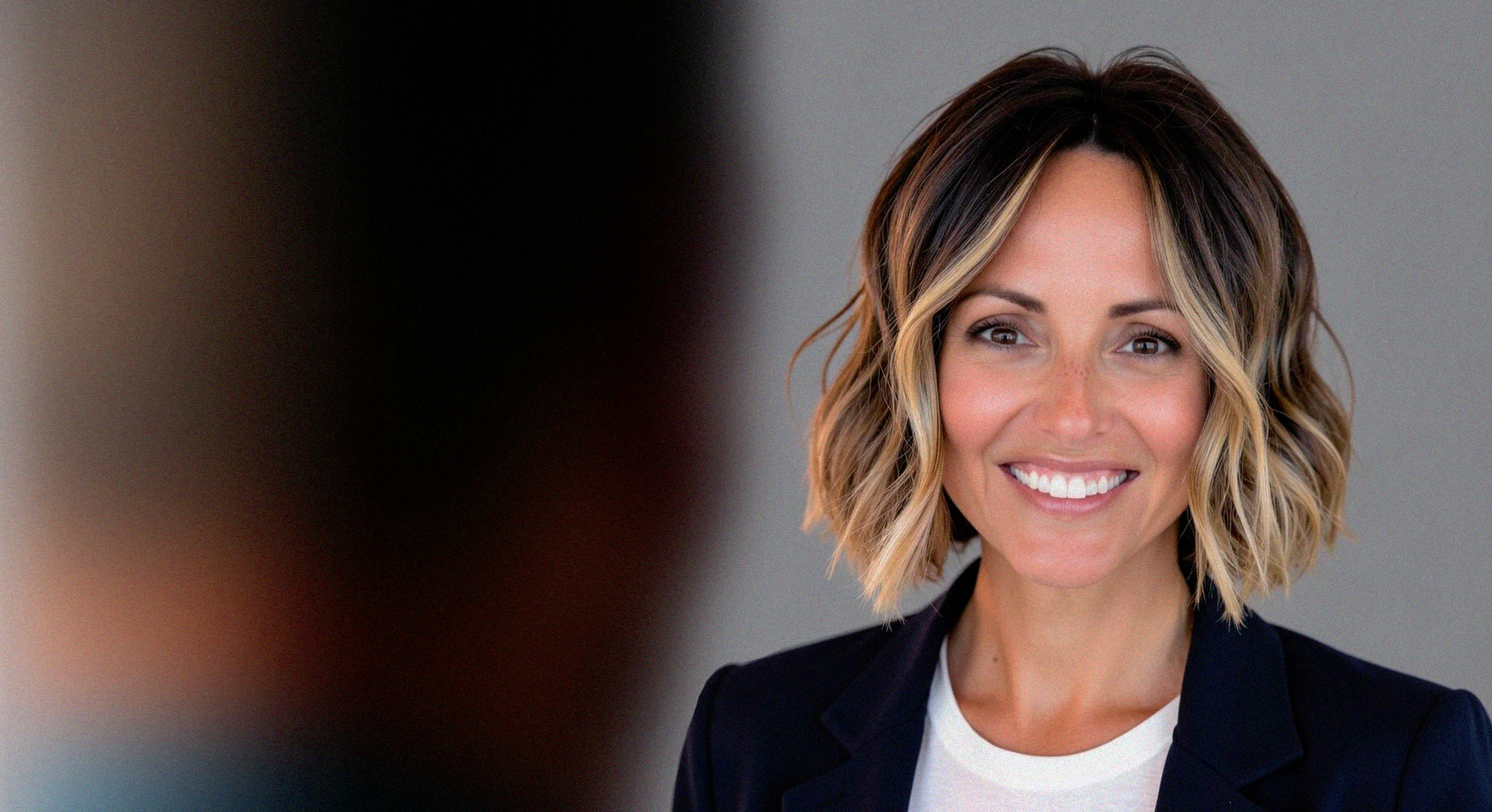
Hi, I’m Maria, and I’m so glad you’re here.
I believe we all need a safe place to stop and take a breath. A place to feel seen and understood while we sort through what’s happening and find our way forward.
Because being human can be hard. Being a teenager can be hard. So can becoming a parent, aging alongside a partner, or aging alone. Watching someone you love become sick is hard. Trying to care for everyone else while you’re barely keeping up is hard. Grieving someone you’ve lost, or beginning to grieve someone you haven’t lost yet is hard. Sometimes, the hardest part is simply being yourself in a world that has already decided who it thinks you should be and where you fit (or don’t fit) in.
You don’t have to have it all figured out before you reach out. We can start wherever you are, and take the next part of the journey together.
Clients
-
Supporting women and all birthing people through the emotional complexities of pregnancy, postpartum, parenthood and identity is very close to my heart. This includes anxiety, depression, overwhelm, perfectionism, guilt and the sometimes enormous gap between the parenthood we imagined and the parenthood we're experiencing.
-
While I’m open to working with all person’s who fall under the umbrella of neurodivergence, I have a particular interest in ADHD and neurodivergence in women, children and families—including executive functioning, emotional regulation, relationships, parenting, the mental load and the experience of trying to navigate a world that doesn't always seem designed for your brain.
-
So much of what we struggle with in adulthood is the direct result of events and experiences in childhood and adolescence. Supporting children and families through difficult transitions, changes in family life, mental-health challenges, loss and uncertainty is paramount in growing healthier, happier adults.
-
Navigating serious illness, the heavy demands of caregiving, or the profound pain of loss can feel incredibly isolating. Education taught me to look at loss through a theoretical lens; experience helped me to understand the messy, non-linear reality of mourning. Together, we will hold space for the complex, changing emotions of anticipatory grief and bereavement, moving at a pace that honors your unique story.
Ways I Can Help
Through education, advocacy, and therapy, I offer a safe space to make sense of what’s happening, help you navigate what comes next, and find a little more room to breathe along the way.
Education & Advocacy
I offer approachable, compassionate education to help you understand what you're experiencing. I can help make sense of systems, resources and options so you can ask better questions, make informed choices, and feel less alone in your process.
Therapy
Therapy is a place to slow down, be honest about what's hard, and figure things out together.
-
Psychotherapy is provided within the scope of my Pennsylvania LSW license and under the supervision of a qualified clinical social work supervisor.
About Maria
I’m Maria Collins, a Licensed Social Worker in Pennsylvania. My work and training have brought me alongside adults living with serious mental illness, people with disabilities and their families, adolescents and adults navigating serious illness and treatment-related changes, and children and families experiencing transition, uncertainty and loss.
I earned my MSSW from Columbia University, with advanced clinical practice training focused on health, mental health and disabilities.
My approach is warm, collaborative and grounded in the belief that people are more than diagnoses, circumstances or difficult chapters they are experiencing.
I want the people I work with to feel seen and safe—and to leave with both compassion and something practical they can carry with them.
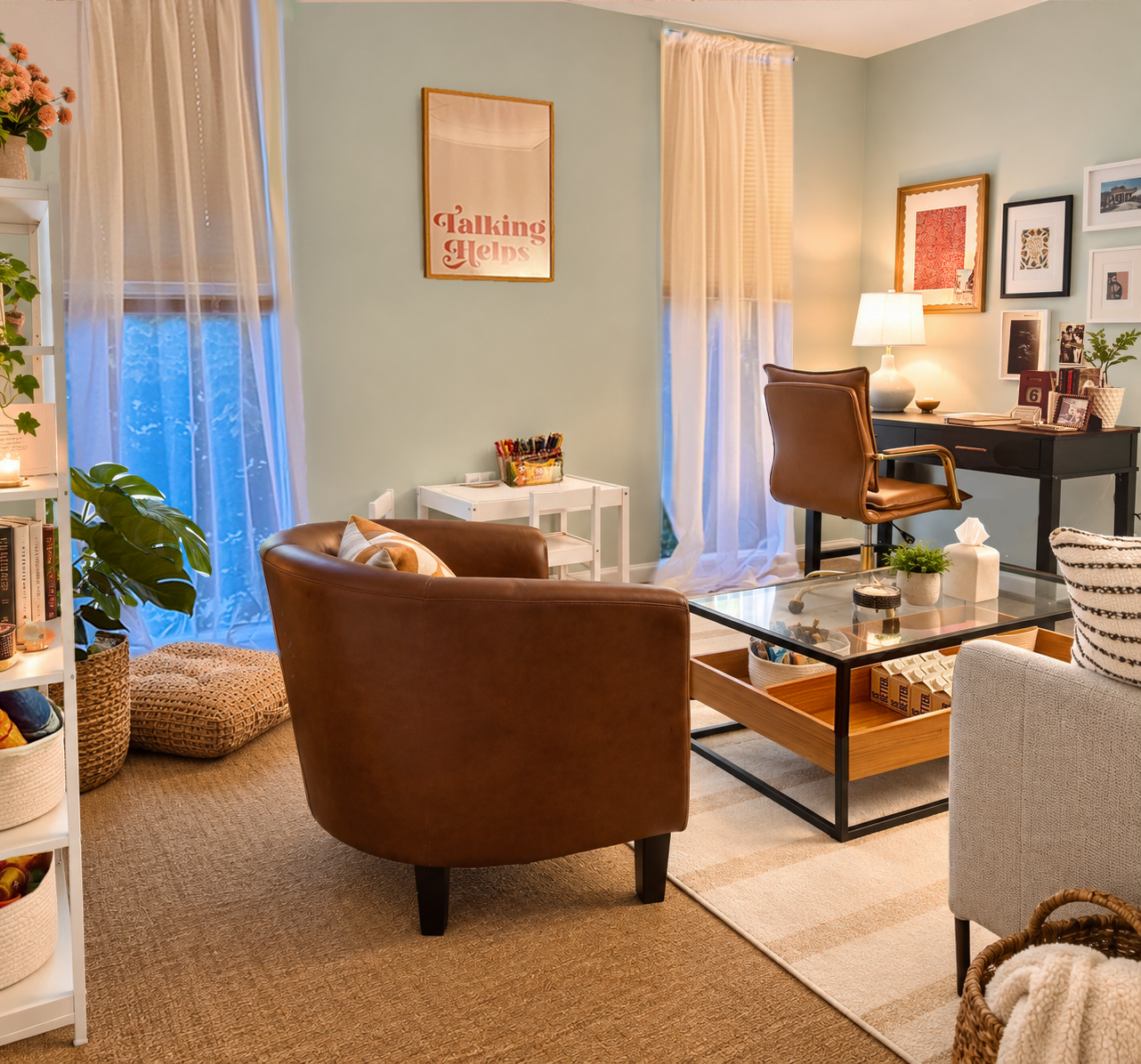
I think that may be what I've been interested in all along: the spaces we create for one another (and for ourselves) when life feels uncertain, the spaces where people feel safe enough to truly exhale.
The Longer Version
The Path To Social Work
I started undergrad studying architecture, and in hindsight, it makes a lot of sense. I didn’t have the language to articulate it then, but what I was drawn to wasn’t so much walls and windows, but the way spaces made me feel.
In my sophomore year, I was asked to write about a building I connected with. Instead, I wrote about a corner in my childhood home that I had named “My Sunny Day Place” when I was very young. It was 1.5 square feet where two walls met around a heating vent, but for some reason, it made me feel safe when life didn’t always.
After architecture, I spent nearly a decade working in web design, branding and copywriting, exploring how people experience the digital spaces they encounter.
And then there was Dear Martha.
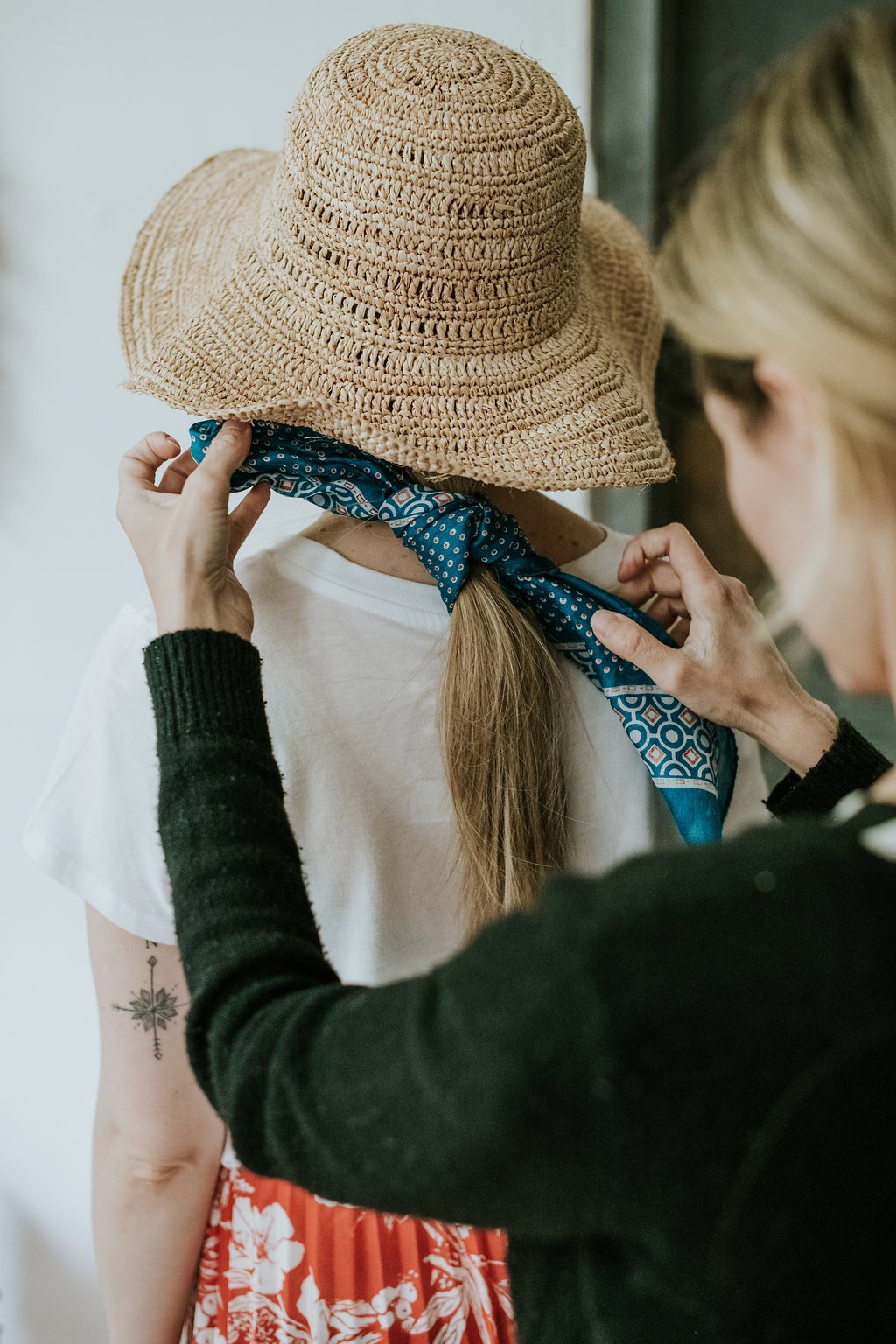
Dear Martha stemmed from my desire to create meaningful ways for people to care for the people they love. What began as a line of headwear and wellness products for people experiencing cancer became a doorway into conversations about care, grief, love and loss.
As Dear Martha grew, what I found I loved most were those connections—with the women who were interested in what we were creating, and with the people who loved them. They were searching for a place to process the potential loss of their hair alongside the potential loss of literally everything else. Mothers, sisters and spouses who didn’t know what else to do except buy something—anything—that might bring a little comfort reached out to me to talk, to share.
Those conversations changed me. I found myself wanting to do more than offer something that might bring comfort. I wanted to know how to sit with their grief, fear, anger and uncertainty—and how to help when someone didn’t know what came next.
Those questions were not entirely new to me.
Serious illness and loss had been part of my own life from a young age. Life experiences changed the way I understand what it means to move through the world without always having the words, support or framework you need.
They also deepened my interest in the experiences of women and families who are trying to make sense of something that has suddenly—or slowly—become harder than they expected.
So I went back to school.
For three years, I studied clinical social work and learned more than I could have imagined—not just about therapy, but about people, systems, relationships, trauma, resilience and the many different ways people find their way through difficult things.
I think that may be what I've been interested in all along: the spaces we create for one another (and for ourselves) when life feels uncertain, the spaces where people feel safe enough to truly exhale. Where they can be seen, understood and cared for. Where, for a little while, they don't have to navigate everything alone. I can’t guarantee sunny days, but when it’s dark or stormy, I can offer a place of warmth and safety.
That is the kind of space I hope to create now.
Interested In Working Together?
Fill out the form below to connect.